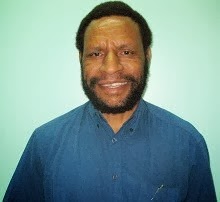
I was supposed to give an address at the UPNG TSCF Graduands' Night which was held at the CRC Bethel Centre at Waigani on the night of Saturday 20 September. Unfortunately I could not speak due to shortage of time. The following is the speech I prepared.
******************************************
Good evening, pastors, parents and friends of TSCF, graduating students, ladies and gentlemen!
It is a real privilege for me to have the honour of giving the Key Note Address at the 2008 TSCF Graduands Night. The last time I attended such a meeting was around this time in 1988 at the UPNG Open Air Theatre – when I was among the graduating group!
I have experienced what it means to live in contemporary Papua New Guinea as a product of TSCF, a Christian and a lay person over the past 20 years, so I could talk about many many things tonight to provide some guidance to this year’s graduating students. But because time will not allow me to do so, I will concentrate on one important topic, and it is this:
EDUCATION DOES NOT STOP AT GRADUATION!
Many people think that education stops when they graduate from college or university. Students breathe a huge sigh of relief after sitting for their final examinations. They think that the days of sitting in the classroom, sticking their noses in books and doing late night studies are over, and they are ready to face what in their view is a free world. They think education stops when they graduate.
But the truth is:
EDUCATION DOES NOT STOP WHEN YOU GRADUATE.
EDUCATION IS A LIFE-LONG PROCESS.
REAL EDUCATION ACTUALLY STARTS AFTER GRADUATION, AND IT STOPS ONLY AT THE DEATH BED!
What you have learnt in school is not enough for you to succeed in life. There is more to learn. You may leave the classroom upon graduation, but the street waits to teach you its lessons.
IN SCHOOL, THE CLASSROOM HAS BEEN YOUR WORLD; AFTER GRADUATION, THE WORLD IS YOUR CLASSROOM.
Life has a lot of lessons to teach you.
LIFE IS IN FACT A SCHOOL FROM WHICH THERE IS NO GRADUATION!
EDUCATE YOURSELF BY READING
People from the developing world have not had a reading culture. Our ancestors passed on information verbally. They were good at remembering events and dates. History was in their minds, not in books.
Coming from this background, most PNG students have had difficulty forming the habit of reading. When they do read, it was due to their fear of failing exams, and not with the intention of acquiring knowledge. Their level of comprehension is therefore poor, and reading becomes a real burden.
Therefore when people graduate and enter the workforce, they abandon their textbooks altogether. They do read comics, novels and newspapers just to be in tune with what is happening, but they avoid heavier materials such as textbooks and journals.
If you want to succeed in life, you need to continue reading after leaving school, not just light material like comics and newspapers, but real books. You need to define an area of interest and study it in detail. It may be what you studied in school, or it may be some other subject.
Nowadays, with the revolution in information and communication technology, the opportunities for self-learning abound. You can become an expert in almost any field by researching and teaching yourself through books, the Internet, CDs, DVDs, etc.
TODAY’S WORLD REVOLVES AROUND INFORMATION. IT IS AN INFORMATION-DRIVEN AND KNOWLEDGE-BASED MARKET PLACE IN WHICH THE BETTER INFORMED YOU ARE, THE MORE RELEVANT AND COMPETITIVE YOU BECOME.
You need to realize that you have not been taught all that you need to know to succeed in your chosen profession. What school has merely done is basically to whet your appetite for knowledge. You have received some instruction on how to acquire and process information. The ball is now in your courts to continue learning, because:
• THE PACE AT WHICH THE WORLD IS MOVING RENDERS MUCH OF WHAT YOU HAVE LEARNT IN SCHOOL OLD AND EVEN OBSOLETE AT GRADUATION.
• WHEN YOU STOP LEARNING, YOU STOP GROWING. YOU BECOME STALE. YOU STAGNATE AND GET LEFT BEHIND!
Apart from raising your curiosity, school also teaches you more and more about less and less. The higher you go, the more and more you learn about your particular area but the less and less you learn about other areas.
That is why if you want to succeed professionally and financially, you need to teach yourself more and more about other areas.
YOU CAN BE A SPECIALIST, BUT SURVIVAL IN THE MARKET PLACE DICTATES THAT YOU BECOME A GENERALIST AS WELL.
What am I saying? Today’s market place is so inter-related that accountants, for example, must know some economics, politics, geography, history, chemistry, medicine, engineering, marketing and even psychology and philosophy!
You can do that only if you keep learning after graduating.
HOW I HAVE TAUGHT MYSELF
When I encourage you to read and study, I am writing from personal experience. I am somebody who has developed the habit of reading right from community school. Today, 20 years after leaving school, I literally sleep with books. Not one day goes by without me reading something. You will find books in our living room, the bed room, under my pillow, in the vehicle, and in my briefcase. While my wife goes to the shop or the market, I sit in the vehicle and read. If I am traveling, I carry several books to read on the plane and in the hotel room. If I do not carry hard copies, I have many electronic books (e-books) in my laptop computer which I read during breaks at work and while traveling.
I have invested a lot of money in books on areas of particular interest to me. These include international commodity trading, export marketing, sales, marketing and advertising, business, stock market investing, real estate, finance, risk management, book publishing, public speaking, leadership, etc. I am so avid a reader that one of my former bosses used to call me a ‘sponge’. I soak information.
I have had the privilege of traveling to many parts of the world (over 20 countries) in the course of my career. I have used the opportunity to buy a lot of books with my traveling allowances which are not available in bookshops within the country. Many people come home from such trips with presents for their families and friends, but I have returned with suitcases full of books. The combined value of the knowledge contained in these books probably runs into the hundreds of thousands, even millions.
My studies of international commodity trading, and coffee trading in particular, has resulted in landing consultancy jobs with the Government and the Coffee Industry Corporation. I am recognized as a national expert on international coffee marketing. I have used the knowledge to train other people, and in the process recouped all the money I invested in the books, and more.
Benjamin Franklin once said:
“IF AN INDIVIDUAL EMPTIES HIS PURSE INTO HIS HEAD, NO ONE CAN TAKE IT FROM HIM.”
This is true. You can lose all your money and your educational records and references, but what is retained in your mind is always yours to keep. Read as much as you can. Invest in books and utilize the knowledge you gain from them, and you will be on your way to success.
INVEST IN YOURSELF
Take advantage of opportunities for further studies, especially those through which you can gain some skills. Many scholarships are available from donor agencies. Check with your employer or directly with foreign embassies for information on how you can benefit from these scholarships. At least somebody else is paying for it.
Invest in yourself continuously. Apart from going for further studies and reading, purchase and listen to audiotapes, videotapes and compact disks on your areas of interest. Instead of playing music on your stereo or watching TV all night, listen to these tapes. Play tapes in your car while traveling. MAKE YOUR CAR YOUR UNIVERSITY ON WHEELS.
Attend seminars and workshops. Take short courses or attend evening classes. Further your education through distance learning. Increasing your knowledge is by far the best investment you can make.
GET CONNECTED TO THE INTERNET
Another investment you should make is to buy a computer and get yourself connected to the Internet. It can be a laptop or a desktop, and it does not have to be brand new. There are cheap second hand computers around which work as well as new ones. Do not rely on your office computer. Buy your own, and get yourself connected to the Internet.
In today’s information age, you cannot afford not to get online. Invest time in searching the World Wide Web for information on subjects of interest. Although some information is for sale, there is a lot of free information. There are also e-books that you can download free of charge from the Internet.
Subscribe to discussion groups, forums and newsgroups. Join a few online communities and enter into dialogue with members of those communities from all over the world. The Internet has brought people from all countries of the world closer to each other at the click of the mouse. Get online and know as many people of the digital community as you can, and learn from them.
Once again, I am writing from personal experience. I have learnt a lot from books, but I have also learnt from the Internet. I have spent long hours on the Internet, as a result of which I have a lot of information on my areas of interest. I also download the information, package it appropriately and present it at workshops and seminars for a fee. And the more I teach, the more I learn and the more I understand. As the saying goes, teaching teaches the teacher.
WORK TO LEARN, NOT MERELY TO EARN
If you get a job, learn as much as you can about that job. Many people stick to their little corners, do their bit and get paid. Do not be like them. Do what you are supposed to do, but also find out what everyone else is doing in the organisation.
Ask questions, and establish how what you are doing fits into the overall organizational activities and goals. Find out about the industry your employer is in. Investigate what the market trends and possibilities are in that industry. Find out what the Government’s policies are with respect to your industry.
When I joined the Coffee Industry Corporation in 1993 as a cadet economist, I realized that the coffee industry was huge, bringing in hundreds of millions of kina annually in export revenue. I realized that if I was to perform well in the job, I needed to know about this industry. So I spent the first 2 weeks at work reading most of the books, journals, periodicals, and special reports in the library. I am probably the only person that read all the books and reports in the library at the time. (I could tell this from the amount of dust I had to brush off the covers before reading the books.)
I read about everything from coffee production to processing and quality control, to exporting and international trading, insurance, shipping, trade documentation, payment and bank procedures. I read about Government policies, industry standards, standing rules and guidelines, and the history of the industry from inception to the present.
After 2 weeks of intensive reading and note-taking, I had a sound understanding of the industry. With that knowledge, and further knowledge I gained from continued reading, I performed so well that I was promoted every year, and within 5 years I was appointed a Divisional General Manager. I was the youngest among the top executives of the Corporation, and I exercised a lot of influence on decisions. The older men listened to me and respected what I had to say because I knew more about the industry than they did.
It is from this experience that I say, work to learn more than to earn. If you learn about your job and really understand it, earning will just follow.
READ BIOGRAPHIES OF SUCCESSFUL PEOPLE
One of the things about humans is that we get motivated and inspired by real-life stories more than theories and principles. Hearing stories of people becoming successful after tragedy inspires people and makes them think, “If they can do it, so can I.” That is why I have shared about my own experiences with the hope of inspiring you.
If you want to succeed, you need to read biographies and autobiographies of successful people. Read about people who have faced various kinds of difficulties but came out winners. Read about people who failed and made mistakes on the road to success and prosperity. Read about people who went from rags to riches, or who were nobodies but became leaders.
I have read many such stories, and one thing that stands out is that the people who accomplished great things in life have been ordinary people. Many had humble beginnings and faced many disadvantages. Many had never been to school, or dropped out of college and university. They went through many hardships and trials in the process of becoming successful. Such stories have inspired me. They will inspire you too.
STUDY MONEY AND FINANCE
One of the topics I encourage you to educate yourself on is money and personal finance. This, as you know, is not a subject taught in school, even though it is the most important area of interest for everyone regardless of which specialty people study about in school or profession they choose after graduation.
School teaches people to work for money. People go to school, study hard, get good grades, get jobs, and receive pay from their employers. But they do not receive any education at all about how money works, and how to harness money for their benefit.
The result is that only a few know how to make money work for them, while the majority works for money all their lives. Those who make money work for them become employers, while those who work for money become employees. Those who know how to make money work for them get ahead in life, while those who work for money get left behind.
ACADEMIC EXCELLENCE AND PROFESSIONAL SUCCESS DOES NOT GUARANTEE FINANCIAL SUCCESS. TO BE FINANCIALLY INTELLIGENT, YOU MUST STUDY HOW TO MAKE THIS WILD THING CALLED “MONEY” WORK FOR YOU.
I have come to the end of my address.
I wish every graduating student the best life has to offer you as a child of God. Let me end with Hebrews 13:5, one of my favourite scriptures. It says:
“For He Himself has said, ‘I will never leave you nor forsake you.’” The Amplified Version says, “I will not, I will not, I will not leave you nor forsake you nor relax my hold on you.”
That’s how committed God is to you as His children. His name is Emmanuel. His name is Jehovah Shammah. God is with you, and He is for you. And as Romans 8:31 says, “If Almighty God be for you, who can be against you?”
REMEMBER: EDUCATION CONTINUES BEYOND GRADUATION. WHEN YOU STOP LEARNING, YOU STOP GROWING. LIFE IS A SCHOOL FROM WHICH THERE IS NO GRADUATION. AND EDUCATION STOPS WHEN YOU STOP BREATING.
God bless you all!
Monday, September 29, 2008


Seminars in Port Moresby
I had a powerful week in Port Moresby from 12-22 September 2008. I conducted a "Principles of Financial Management & Stewardship" seminar with Young Professionals and Tertiary Students Christian Fellowship at the Cornerstone Gateway Church. The seminar was attended by a good number of parents as well.
I started with 5 biblical principles, which are that (1) God wants us His children to prosper in all areas of life;(2) God wants us to love and serve Him, not money and material things;(3) God wants us to become good and fruitful stewards of all His blessings (both to manage well and to multiply;(4) it is God's will for us to be conten with what He has given us; and (5) we must be a blessing to the kingdom of God and the world by becoming liberal or generous givers.
I then spoke on the importance of knowing ourselves and our financial positions, followed by having financial goals and how to achieve those goals. On Tuesday 16th September, which was the country's independence day, I spoke about being financially independent. I pointed out that PNG may be politically independent but is economically dependent, and that this could be true of many people as well. I encouraged participants to think seriously about becoming financially independent and free.
I am glad to report that many people testified at the end of the 5 sessions that the seminar was a eye-opener. I believe that I scattered some good seed in peoples' lives and the fruits will be seen in the years to come. I was particularly privileged to speak to students and young professionals, because they do not have the bad money habits which cause many older people to struggle financially.
On Thursday 18 September I spoke at the University of Papua New Guinea's Main Lecture Theatre. It was good to be back after 20 years of leaving school. The MLT had changed from the last time I had been in it as a student. I spoke on the topic "How To Make Money Work For You". The main focus of my 2-hour talk was on prudent management, saving and investing. I think the students learnt alot. Unfortunately we started late so there was not enough time for questions and discussions, but I know that the students did discuss among themselves after the meeting.
Then on the night of Monday 22nd September I was with the UPNG Medical Faculty students at Taurama speaking on the same topic. I really enjoyed this night because we had a lively discussion after the seminar. One important point which arose was that we need to think as Papua New Guineans and not be regionalistic or tribalist in our attitude towards one another. We spoke of the importance of networking among professional Papua New Guineans, and the need for us to take the economy of the country back from outside interests, not through force or legislation but by playing the game of money through investing in businesses, real estate and stocks.
I started with 5 biblical principles, which are that (1) God wants us His children to prosper in all areas of life;(2) God wants us to love and serve Him, not money and material things;(3) God wants us to become good and fruitful stewards of all His blessings (both to manage well and to multiply;(4) it is God's will for us to be conten with what He has given us; and (5) we must be a blessing to the kingdom of God and the world by becoming liberal or generous givers.
I then spoke on the importance of knowing ourselves and our financial positions, followed by having financial goals and how to achieve those goals. On Tuesday 16th September, which was the country's independence day, I spoke about being financially independent. I pointed out that PNG may be politically independent but is economically dependent, and that this could be true of many people as well. I encouraged participants to think seriously about becoming financially independent and free.
I am glad to report that many people testified at the end of the 5 sessions that the seminar was a eye-opener. I believe that I scattered some good seed in peoples' lives and the fruits will be seen in the years to come. I was particularly privileged to speak to students and young professionals, because they do not have the bad money habits which cause many older people to struggle financially.
On Thursday 18 September I spoke at the University of Papua New Guinea's Main Lecture Theatre. It was good to be back after 20 years of leaving school. The MLT had changed from the last time I had been in it as a student. I spoke on the topic "How To Make Money Work For You". The main focus of my 2-hour talk was on prudent management, saving and investing. I think the students learnt alot. Unfortunately we started late so there was not enough time for questions and discussions, but I know that the students did discuss among themselves after the meeting.
Then on the night of Monday 22nd September I was with the UPNG Medical Faculty students at Taurama speaking on the same topic. I really enjoyed this night because we had a lively discussion after the seminar. One important point which arose was that we need to think as Papua New Guineans and not be regionalistic or tribalist in our attitude towards one another. We spoke of the importance of networking among professional Papua New Guineans, and the need for us to take the economy of the country back from outside interests, not through force or legislation but by playing the game of money through investing in businesses, real estate and stocks.
Tuesday, September 9, 2008
How To Make Money Work for You Seminar
I will be with the students of the University of PNG on the night of 18th September speaking on the subject "How To Make Money Work For You". It will be part of the fund raising activities of the Western Highlands Students Association towards an awareness campaign in the province on lawlessness, HIV/AIDS, etc.
I am looking forward to it.
I am looking forward to it.
Principles of Financial Management And Stewardship Seminar
I will be in Moresby from 12 to 16 September conducting a seminar on the subject "Principles of Financial Management and Stewardship". My audience will be student, members of the Southern Region Tertiary Students Christian Fellowship (TSCF) Graduates Fellowhip and other young professionals. I am really looking forward to this seminar, because I know that it will the direction and destinities of the people who attend - for the better.
I will report on the outcome in a future posting.
I will report on the outcome in a future posting.
Seminar in Tabubil, 19-21 August 08
As I mentioned in one of my previous posts, I was up in Tabubil from 19 to 21 August to conduct the "7 Steps To Financial Freedom" seminar for Hastings & Deering Ltd. I really enjoyed the few days in that mining township, with all its constant raining and the sense of peace and security. One thing that came across to me strongly was the fact that the houses in Tabubil don't have any fences at all, unlike all the major towns and cities of PNG. It was like living in a small town in Australia, where people are free to walk around without looking over their backs or employing security guards to protect their properties.
Anyway, as I said, I totally enjoyed the short stay in Tabubil. And I enjoyed the seminar as well. One of the things I stressed constantly was the importance of knowing ourselves when it comes to money matters. I pointed out that one of the main reasons people struggle financially is that they do not really know themselves well, with the result that they live below their potential and they constantly attempt to emulate other peoples' living standards and lifestyles.
I stressed that one of the keys to changed habits and financial success is the ability to frankly admit our weaknesses and decide to change. Most people want to change but don't have the will to change. Some give the excuse that they need time to change. But the truth is that change does not take a lot of time. Anyone who is determined to change can change, literally in a moment of time.
We heard a testimony from Mr. Paul David of how he decided to stop drinking beer twenty years ago. He said that he just decided to quit and has never touched a drop ever since. He did not wait for 1st of January to make a New Year's Resolution. He did not make a big announcement to his family and friends. He just quit!
In a previous posting, I told of how a woman stopped chewing betel nuts. She just decided that she was going to stop, and she did it without any fanfare.
There is never a perfect time to change. Every moment of every day is an opportunity to change. If we really want to change, we can change without any prompting from any one. As they say, "Where there is a will, there is a way".
Most people struggle financially because of bad money habits. It is not that they don't earn enough; it is that they don't manage their money due to habits such as buying things just because other people have those things, or buying things on the spur of the moment without planning to do so.
The response from the people at Hastings Deering Tabubil was very positive. They earn alot of money which they have misused up to the time of the seminar. I hope that I have imparted something into them which will help them to become more prudent managers of their money.
One of the things we agreed is that many of them will meet me in some corner of PNG and they will tell me how they have used the information to change their lives and their financial affairs, and especially how much better off they are. They will tell me of the businesses, properties and shares they own. I am confident this will happen.
Anyway, as I said, I totally enjoyed the short stay in Tabubil. And I enjoyed the seminar as well. One of the things I stressed constantly was the importance of knowing ourselves when it comes to money matters. I pointed out that one of the main reasons people struggle financially is that they do not really know themselves well, with the result that they live below their potential and they constantly attempt to emulate other peoples' living standards and lifestyles.
I stressed that one of the keys to changed habits and financial success is the ability to frankly admit our weaknesses and decide to change. Most people want to change but don't have the will to change. Some give the excuse that they need time to change. But the truth is that change does not take a lot of time. Anyone who is determined to change can change, literally in a moment of time.
We heard a testimony from Mr. Paul David of how he decided to stop drinking beer twenty years ago. He said that he just decided to quit and has never touched a drop ever since. He did not wait for 1st of January to make a New Year's Resolution. He did not make a big announcement to his family and friends. He just quit!
In a previous posting, I told of how a woman stopped chewing betel nuts. She just decided that she was going to stop, and she did it without any fanfare.
There is never a perfect time to change. Every moment of every day is an opportunity to change. If we really want to change, we can change without any prompting from any one. As they say, "Where there is a will, there is a way".
Most people struggle financially because of bad money habits. It is not that they don't earn enough; it is that they don't manage their money due to habits such as buying things just because other people have those things, or buying things on the spur of the moment without planning to do so.
The response from the people at Hastings Deering Tabubil was very positive. They earn alot of money which they have misused up to the time of the seminar. I hope that I have imparted something into them which will help them to become more prudent managers of their money.
One of the things we agreed is that many of them will meet me in some corner of PNG and they will tell me how they have used the information to change their lives and their financial affairs, and especially how much better off they are. They will tell me of the businesses, properties and shares they own. I am confident this will happen.
Wednesday, September 3, 2008
First-Ever Stock Market Investing Class
I have been receiving a lot of queries from people who want to know about how they can invest in the stock market. I am therefore preparing a full day seminar on the subject, which I would like to call the "Stock Market Investing Class". The class will cover the subject in more detail than the only other seminar, which is the 3-hour "First Time Investors' Seminar" conducted by the Port Moresby Stock Exchange, Bank of PNG, BSP Capital Ltd and Kina Securities Ltd (The last two companies being stock brokers).
The subjects I intend to cover include the importance of goal-setting, financial planning, how stock markets are organised and function, the process of buying and selling shares, how to decide which company to invest in and when to buy or sell (fundamental and technical analysis), how to read price quotations,indices and commentary, etc. I am sure that participants will learn alot from this seminar which I intend to conduct in every major town in PNG.
I will publish the actual dates and venues on this site as well as advice my readers and fans via email when I am ready.
The subjects I intend to cover include the importance of goal-setting, financial planning, how stock markets are organised and function, the process of buying and selling shares, how to decide which company to invest in and when to buy or sell (fundamental and technical analysis), how to read price quotations,indices and commentary, etc. I am sure that participants will learn alot from this seminar which I intend to conduct in every major town in PNG.
I will publish the actual dates and venues on this site as well as advice my readers and fans via email when I am ready.
Radio Talk on "Bad Spending Habits"
I was able to return to the studios of KBK FM this morning to continue the "Young Money" program. his morning's topic was "Bad Spending Habits", in which I highlighted 3 of the 6 major habits which keep people in financial bondage, struggle and debt. These were (1)impulse buying; (2) the desire for instant gratification; and (3 spending to keep up with others.
Impulse buying is buying things on impulse or on the spur of the moment, without planning to do so. Most of us do this, and as a result, we waste (as opposed to spend) a lot of money. Instant gratification is about satisfying our desire for certain goods or services now rather than later. This habit also drives people into the hands of the money lenders.
Then there is all the money (a lot of it in fact) which we waste buying things, not because we need them but because other people have them. Most of us don't like the way we look or live; some people even hate themselves. Many of us compare ourselves with others which leaves us feeling that others are better off than us. This makes us want to be like the people we compare ourselves with, we so spend our money the same way they do. We buy clothes we see other people wearing, and eat food other people eat, or even buy expensive items like cars and stereos we see other people having and seemingly enjoying life.
I will continue the talk on "bad spending habits" next week.
Impulse buying is buying things on impulse or on the spur of the moment, without planning to do so. Most of us do this, and as a result, we waste (as opposed to spend) a lot of money. Instant gratification is about satisfying our desire for certain goods or services now rather than later. This habit also drives people into the hands of the money lenders.
Then there is all the money (a lot of it in fact) which we waste buying things, not because we need them but because other people have them. Most of us don't like the way we look or live; some people even hate themselves. Many of us compare ourselves with others which leaves us feeling that others are better off than us. This makes us want to be like the people we compare ourselves with, we so spend our money the same way they do. We buy clothes we see other people wearing, and eat food other people eat, or even buy expensive items like cars and stereos we see other people having and seemingly enjoying life.
I will continue the talk on "bad spending habits" next week.
Seminar with Coffee Industry Corporation Staff
The Coffee Industry Corporation (CIC) - my former employer - is the second organisation in the country to engage me to conduct the "7 Steps To Financial Freedom" seminar. I spent the last 2 days with staff in the CIC's head office in Goroka, to be followed by another 2 days in Aiyura with the research and extension staff.
Mr. Ricky Mitio, CEO, was kind enough to be present to make some remarks. He basically told the participants that he considered the seminar to be beneficial for them, because it is only when people manage their finances well that they are able to perform well at work. According to him, financial problems lead to may staff not giving their best to the employer. He stated that in his view CIC staff were adequatey remunerated, but what is important is how people manage their salaries. He also remined staff that there is "life after CIC", and how they lived then will depend on how they manage their income now.
The seminar was timely in many ways, one of which is the fact that the future of the majority of CIC staff is doubtful in view of a Board decision to employ people with a minimum of a first degree in the key positions within the organisation. If this decision is implemented, many of the current employee will need to go back to school or they will be retrenched or made redundant.
I am sure that many employees in the country are faced with a similar bleak future. I am hopeful that other employers will give me the opportunity to talk to their employees in the way the Hastings Deering and the CIC have done.
Mr. Ricky Mitio, CEO, was kind enough to be present to make some remarks. He basically told the participants that he considered the seminar to be beneficial for them, because it is only when people manage their finances well that they are able to perform well at work. According to him, financial problems lead to may staff not giving their best to the employer. He stated that in his view CIC staff were adequatey remunerated, but what is important is how people manage their salaries. He also remined staff that there is "life after CIC", and how they lived then will depend on how they manage their income now.
The seminar was timely in many ways, one of which is the fact that the future of the majority of CIC staff is doubtful in view of a Board decision to employ people with a minimum of a first degree in the key positions within the organisation. If this decision is implemented, many of the current employee will need to go back to school or they will be retrenched or made redundant.
I am sure that many employees in the country are faced with a similar bleak future. I am hopeful that other employers will give me the opportunity to talk to their employees in the way the Hastings Deering and the CIC have done.
Wednesday, August 27, 2008
Seminar in Port Moresby, 15-16 August
I have conducted "7 steps to financial freedom seminar" for Hastings Deering 10 times now. Each session is different, and the more I have done it, the more I have learnt myself. I have gained a lot of insight into the financial lives of the participants.
One of the most enjoyable sessions for me was the last one in Moresby, which involved company employees and some of their spouses. People were more open in discussing their experiences especially at home. One thing that stood out clearly was that many people are secretive about their fnancial affairs in their homes. Where the man and the woman both work, it became clear that not many couples knew how much the other party earned, how much they had in their accounts, what financial commitment they had, etc. As a result, money-related disputes and disagreements were common.
In addition to that, children were left completely in the dark as to the financial positions of their parents. This ignorance on the childrens' part resulted in the children coming withtheir needs and demands, and when these are not met, they hit back in many different ways. The overall result is that working family face many problems at home, despite the fact that the husband and wife both work and even earn a lot of money.
It also emerged that not many working families have financial goals to guide how they manage their money. It seemed that money is for spending only, not saving and investing.
ne of the participants reported that she used to spend between K30 and K50 a day on betel nuts. She was so addicted that when she did not have buai in the house, she would force her husband to take her to a street seller at odd hours in the night. If he refused, she would put up a fight. All her money was for her and her buai. This went on for many years until she read my book "Young Money". She realised that she had been wasting alot of money (we worked it out to be around K11,000/year, based on K30/day x 365 days)! Now she spends only K1 per day.
I was so glad to hear that. At least one woman and her family have been positively impacted by the book. I told her that now, instead of spending the money she used to spend on buai, she should save it. I assured her that she would have a lot of money by the end of the year.
I hope that she does not return to her old ways. In fact, she testified that as I was taking them through the seminar, she had started imagining what she would be doing with her money. She told me that she even imagined starting a business back in her village. I trust that she follows through with her plans, and really wish her God's blessings.
One of the most enjoyable sessions for me was the last one in Moresby, which involved company employees and some of their spouses. People were more open in discussing their experiences especially at home. One thing that stood out clearly was that many people are secretive about their fnancial affairs in their homes. Where the man and the woman both work, it became clear that not many couples knew how much the other party earned, how much they had in their accounts, what financial commitment they had, etc. As a result, money-related disputes and disagreements were common.
In addition to that, children were left completely in the dark as to the financial positions of their parents. This ignorance on the childrens' part resulted in the children coming withtheir needs and demands, and when these are not met, they hit back in many different ways. The overall result is that working family face many problems at home, despite the fact that the husband and wife both work and even earn a lot of money.
It also emerged that not many working families have financial goals to guide how they manage their money. It seemed that money is for spending only, not saving and investing.
ne of the participants reported that she used to spend between K30 and K50 a day on betel nuts. She was so addicted that when she did not have buai in the house, she would force her husband to take her to a street seller at odd hours in the night. If he refused, she would put up a fight. All her money was for her and her buai. This went on for many years until she read my book "Young Money". She realised that she had been wasting alot of money (we worked it out to be around K11,000/year, based on K30/day x 365 days)! Now she spends only K1 per day.
I was so glad to hear that. At least one woman and her family have been positively impacted by the book. I told her that now, instead of spending the money she used to spend on buai, she should save it. I assured her that she would have a lot of money by the end of the year.
I hope that she does not return to her old ways. In fact, she testified that as I was taking them through the seminar, she had started imagining what she would be doing with her money. She told me that she even imagined starting a business back in her village. I trust that she follows through with her plans, and really wish her God's blessings.
Tuesday, August 26, 2008
The Leap of Faith
The title of today’s message is “The Leap Of Faith”. It is based on the book of Luke Chapter 5 and verse 4. Jesus commanded Peter to launch out into the deep and let down his net for a catch. Jesus actually commanded Peter to take a leap of faith into the deep or the unknown.
Peter’s boat was at the shore, and he had to launch it out. He had to exert some force to push his boat away from the shore, adjust his sails, and set out to the deep. The force with which he pushed his boat away from the shore can be likened to a leap of faith. Jesus only promised a catch, and Peter lurched forth, his mind most probably screaming all the negativities and the seeming foolishness of his actions.
But it was this first step that changed the course of Peter’s life forever. There is a Chinese proverb which says, “A journey of a thousand miles begins with the first step.” It was the first step which Peter took which taught him to realize that there is reward in obeying the Lord; he learnt that God could turn him from a struggling fisherman to a prosperous person within the space of a few hours; that first step away from the shore was to turn him from a fisherman to a fisher of men.
A ship or boat cannot move or maneuver much near the shore. The shore is too shallow to move around. The shore can represent all that stands in the way of us moving the boats of our lives forward. Things such as our experience, customs, traditions, religious ideas, mental strongholds, habits, human wisdom and understanding, security, comfort zones, etc, etc. The three chief forces are fear, doubt and unbelief. Fear makes us ask, “what if?”, and it is always with imaginations of the possible negative things that could happen. Doubt makes us wonder, “Will it work?” Unbelief makes us say with some finality, “It will not work.” The shore represents these, and all the negativity and forces arrayed against us taking steps of faith.
One of the reasons we Christians do not experience all that God has for us, is that we are content sitting on the shores of life. We hear a lot of good, anointed and powerful preaching, but we are either unwilling or afraid to put what we hear into practice. So we stay within our self-imposed borders – and we miss out on God’s best for us.
Somebody said there are three types of people: the immovable, the moveable and the moving. Some Christians are immovable. No matter how much they hear, they just will not change their minds or be willing to change and move forward. There are others who are open-minded and changeable. And there are others who are moving without much persuasion or force. What type of Christian are you?
The Christian life is a life of faith from beginning to end. Romans 1:17 says, “from faith to faith”, and “the just shall live by faith.” Psalms 84:7 says we go “from strength to strength”. God wants to take us from one level of faith to another. He does not want us to park at His minimum. Do you know what God’s minimum is? God’s minimum for us is salvation. God told Moses that the Passover night was to mark the beginning of the Israelites’ year (Exodus 12:2). It was only the beginning of their journey to the Promised Land. Getting saved is only the start. God wants us to go from that minimum to possessing everything else that is a part of His total salvation package.
We have to take leaps of faith – away from the known and what provides us comfort and confidence based on human experience, into the deep or unknown, where we rely totally on God’s guidance, protection, provisions, etc. Remember, on the shores you carry yourself; in the deep, the water carries you.
Faith is taking risks. In the world of business, some of the most successful people (who are not necessarily Christians), are those who take risks. They are willing to stake their savings on ventures which have as much chance of failing as succeeding. What makes them take those risks? Strong faith that somehow things will work out for them.
One man who started off living in his car and became a multimillionaire within 10 years said this, “Whenever I come to the edge of my world, or when I am about to take a step into the unknown, all I have at that moment is my trust in a power much larger than myself [i.e. God]. It is at such moments – moments when I know I must step over the edge – that I take a deep breath and take the step. It can be called a leap of faith. In my opinion, it is those first steps that have made all the difference in my life.” The same man made another statement: “The boundaries of a person’s reality often do not change until that person forsakes what he or she feels confident in and goes blindly with faith. So many people do not become rich because they are limited by their self-confidence rather than the limitlessness of faith.”
All successful people are risk-takers – people who are willing to leap forward in faith. One man who took such risks was Abram, who just packed up and left his country, tribe and family (symbolic of security and comfort) when God told him to do so (Genesis 12:1-4). Hebrews 11:8 says he left his homeland, not knowing where he was going, or where he would end up. All he knew was the promise of God that he would receive land and multitudes as children.
Another was Isaac, who risked his livelihood and that of his family by sowing precious seed in a year of drought (Genesis 26). As a nomadic, he carried seed wherever he went. When the Lord told him to plant that seed into the cement-like soils of Gerar, he took a deep breath and obeyed. And his life was changed forever as a result. From a wandering nomad, he became the richest man within the space of one year. The Bible records in Genesis 26:12-14, “The man began to prosper and continued to prosper until he became very prosperous; for he had possessions of flocks and of herds and a great number of servants. So the Philistines envied him.” (NKJV) Verse 16 records that Abimelech the king said to Isaac, “Go away from us, for you are much mightier than us.” When people who take risks succeed, those who sit within their comfort zones tend to criticize and become envious.
If we are to go from the minimum of God to His maximum for us, which is life in all its fullness (John 10:10), we must take leaps of faith into the unknown. Net-breaking, boat-sinking miracles are only found in the deep. If we hang around the shores, all we have will be clean strong nets and nice boats - but empty ones. God’s desire is that we might prosper and be in health even as our souls prosper (3 John 2). But He requires us to leave our comfort zones and step out into the deep in faith.
Simon Peter launched his boat into the deep and let down his net, and caught the largest number of fish he had ever seen in his life. There were so many fish his net began to break. When he called his partners over and they loaded the fish into two boats, both boats began to sink. The miracle caused him to bow down and worship Jesus right there on the deep seas, in a boat about to sink with fish.
When he landed on the shores, he left everything – fish, boats, and his business – and followed Jesus. He became one of the 12 apostles; he was among the 3 closest disciples (the others being James and John); he was the first man to walk on water on another occasion; his commitment was tested when he had to deny knowing Jesus three times; he was challenged by Jesus to feed His sheep; he was the leader of the church from the Day of Pentecost; he became a missionary to the Jews; and history says he was crucified up side down in Rome. All this started with the first step on the shores of Lake Galilee. That one step of pushing his boat into the deep sea changed the course of his life forever.
Mark 10:46-52 tells the story of Blind Bartimaeus. He was blind, and because he could not feed himself due to the disability, he lived off the generosity of other people through begging. One day he heard multitudes walking along the road where he sat. When he asked what was happening, he was told, “Jesus of Nazareth passes by.” He might have heard about Jesus from his relatives. From the stories, he was convinced that if he met Jesus, his sight would be restored. Now that Jesus was passing his way, this was his only chance – or as they say, a once-in-a-lifetime opportunity. So he cried out with all his strength, “Jesus Son of David, have mercy on me.” When the people told him to shut up, he shouted even louder, “Jesus Son of David, have mercy on me.” It was a cry of desperation. It was now or never. Jesus heard him above the noise of the multitudes and stopped, and called for him to be brought to Him.
What I would like us to notice is how Bartimaeus reacted when he was told that Jesus wanted him to come to Him. Verse 50 says, “Casting away his garment, he rose, and came to Jesus.” Another translation says, “Bartimaeus yanked off his old coat and flung it aside, jumped up and came to Jesus.” (TLB). The Amplified Version says, “And throwing off his outer garment, he leaped up and came to Jesus.”
Bartimaeus did two very important things. Firstly, he cast or yanked off his coat – probably his only earthly possession which served both as a blanket at night and an umbrella during the hot day. That coat was the badge of his status as a beggar. Notice that before he even came face to face with Jesus, he threw the coat off his shoulder. He was casting down his identity as a blind beggar, in preparation for a new identity which he was certain he would receive upon meeting Jesus. Even before he received his sight, he was acting as if he was already healed of blindness, and he did not need the coat any more. What did Jesus say in Mark 11:24? “Believe that you have received it, and it shall be yours.”
The second action to note is that he leaped from where he was sitting, stood up and began to walk. What kind of leap was that? It was a leap of faith. He did not wallow in self-pity and wait for Jesus to come to him. Instead, he leapt to his feet and started walking towards Jesus. What did Jesus tell him? “Your faith has made you well…” (Verse 52).
There are many things that hold us back, and deprive us of life in the deep. A step of faith may be necessary in some instances, but in others, a leap of faith may be necessary. Do you know what a leap is? A leap is a long step up and out. Sometimes we need to take drastic action to cut ourselves free from what holds us back.
Do you know what the best way is that professional swimming coaches use to teach kids to swim? They just push them into the water! If the kids are about to drown, they go in the rescue them. But most of the time the kids swing their arms and legs and splash the water, and in no time learn how to swim or just float and let the water carry them. Sometimes we need to just jump into the deep waters, and sink or swim. It is risky, but it works.
Do you know how a mother eagle trains its chicks to fly? It carries them in its beak and flies as high as it can, then just lets the chicks fall down. The chicks are internally wired to fly, so they find a way to spread their wings and flap them and begin to fly, or let the wind carry them. Children have what it takes to swim. Eagles have what it take to fly. We have what it takes to live in faith (Romans 1:17; 2 Corinthians 5:7). If this were not so, God would not have commanded us to live and walk by faith.
The first step, or leap, as the case may be, is important. Peter’s leap resulted in a net-breaking, boat-sinking miracle – a miracle that changed the course of his life forever. Life-changing miracles may be waiting to happen in response to the steps we take in faith. I encourage you to take those steps and leaps into the unknown which you know in your heart you need to take. One lesson from the church’s experience as related above is that inaction dams up God’s blessings, while action releases them. As you take those steps and leaps, dams will break and blessing and prosperity will flow.
Many of you have million kina dreams and ideas. But you have been scared to do what it takes for those dreams to become a reality. You hesitate too much. You fear and doubt too much. You have been fearful of taking the first step towards making those dreams become a reality, because you just do not know how it will turn out. You are undecided. You think and see yourself failing more than succeeding. I encourage you to take a leap of faith. Just step forward. Do as the multimillionaire said: Trust in God, breathe deeply and take a leap into the unknown. Then you will say, ”Those first steps have made all the difference in my life.”
A story and a testimony before I close. Napoleon was a French conqueror. One time he commanded his troops to sail over the English Channel to conquer England. They landed at a place called Dover, which has very high cliffs running into the sea. This was the only safest route to enter England. Napoleon made his troops climb the cliffs, but left a few of them behind with specific instructions to burn all the ships. When the troops had climbed over the cliffs and turned around, they saw their only hope of retreat going up in flames. Napoleon told them, “Men, conquer, or be conquered! Win or perish!” The troops launched out and conquered England. The morale of the story is that sometimes we try taking a leap forward, but are not really determined to go on, so we make certain we can always fall back to our places of comfort and security just in case it does not work out. In other words, we are doubtful, and the Bible says that the doubtful person is double-minded, and a double-minded person will not achieve anything (James 1:6-8).
I would like to end with a personal testimony. I left a company I was working for in December 2000, and spent the next eight months of 2001 looking for another job. There were jobs in other centres which I could have applied for, but I did not want to leave Goroka. Fortunately, there were no jobs for my level of expertise and experience in Goroka. I say fortunately, because if there was a job then, I would today be slaving for somebody else.
In around August 2001, Pastor Peter came to our house to encourage us. The Pastor used an illustration which opened my mind to see possibilities which were closed to me up to that time. He said, “carpenters use hammers and saws; mechanics use spanners; farmers use spades and knives; for you, the computer is a tool which you need to make use of.” When he said this, a light came on inside my head, and ideas began to flood in. After he left, I sat at the computer and started writing a short training course for coffee exporters. Within four weeks of that conversation I made K12,000 from course fees. I don’t have that money now. In fact, most of it went to settling debts which were then up to our necks.
In 2000 I had been receiving K2,000 per month from the company I was working for, so the K12,000 from the course was equal to six months’ salaries. The significance of the story is this: when I worked for somebody else, I earned K12,000 in six months; on my own, I could earn K12,000 in one month. When I saw this, a new world opened before me. I saw that it was possible to become financially prosperous without a full-time job. I launched out in faith as a freelance consultant. In other words, I created my own job, rather than waiting for somebody to give me a job. I can testify that that decision has changed the course of our lives as a family. I have not made a lot of money yet (I am sure I would if I marketed my services well), but I do not regret having made the decision either. Based on what I have seen so far, I do not intend on working for another person job ever again.
In relating this experience, I am not recommending that you resign from your job and place the security of your family at risk. You will definitely leave or be kicked out one day in future, but don’t do it tomorrow. If you are unemployed and are looking for a job, may be this testimony can open your eyes to see options other than getting a job and working for somebody all your productive life, and get pushed around by bosses all the time. Is it possible that you could stop thinking about becoming someone’s tool and start working for yourself with what little you have in your hands? Be your own boss? Employ other people? It is possible.
If you are employed and have special skills, knowledge, experience or expertise, what I can say is that you are probably overworked and underpaid. Most skilled people are worth more than what they receive from those who employ them. To keep such people, employers provide additional benefits like houses, vehicles, school fees etc. The reason they are doing this is to make you feel secure so that you don’t go out and do something for yourself. It is also a sign that you are making more for them than what they are paying you.
To make the story complete, I must say that it was not easy for us at the start. When I was working for other people, they paid me fortnightly. So income was regular. On top of that, they paid rent for the house we were living in; they paid a monthly allowance for my vehicle, and even paid our school fees. This was the kind of life we were used to. When I became unemployed, and then launched out as a self-employed person, we found it very difficult to adjust to life without a regular pay packet. Many times Christians assisted us financially, gave us food, serviced our vehicle, etc. That is one of the benefits of being a Christian. You associate with people who are genuine about helping you, unlike relatives and wantoks who are mostly interested in getting from you. The children were in private school when I was working for a salaried job. When I became self-employed, we could not pay the fees, so we pulled the children out and enrolled them in public school. One time we were nearly thrown out onto the streets because rental payments for the house were six months in arrears. But it brought the family together. We prayed and cried together. And by the grace of God we have survived the last 4 years without a full-time job and a fortnightly salary.
The point is that when you launch out into the deep, it is painful. If you are a father and you have a family to look after, you really need the support of your family. Without their support, you will find it hard launching into the deep and living in it. People like Abraham and Peter just packed up and left everything to follow God without consulting with their families, especially their wives. Peter gave up a small business for full-time ministry. That must have been painful for him and his family. But things did work out later.
To end my testimony, we have been living in the deep the last 4 years. Sometimes when there have been short-term jobs, we have had money; many times jobs have not come by, and we have run short. But what I know is that it is possible to live without the security of a full-time job. Faith is essential for launching into the unknown. God requires us to believe first, then receive and see.
By way of summary:
· Peter took one step of faith, and he experienced life-changing miracles. The first step is important.
· Salvation is God’s minimum. It is only the start. There is more to the Christian life than getting saved.
· Faith is taking risks. Most successful people are risk-takers. Biblical examples include Abraham and Isaac.
· We must leap into the unknown to see net-breaking and boat-sinking miracles. On the shores we will only have clean nets and empty boats.
· Blind Bartimaeus cast off his coat and leaped forward to Jesus. That leap of faith changed his life and destiny forever.
· As Peter helped the lame beggar to rise up and leap forward, the word of God gives us a boost on the inside so that we can take action on the outside.
· Many things hold us back, including fear, doubt and unbelief. A leap of faith is what is necessary to cut ourselves free from the things that hold us back and go from the known to the unknown.
· Children have what it takes to swim. Eagles have what it takes to fly. We have what it takes to live in faith.
· When we start moving, God releases His miraculous supplies. When we wait, He waits, and sometimes he uses situations to shock us into motion, and when we start moving, He moves. The project at Shalom is testimony to this.
· Sometimes it may be necessary to burn our links to the known, the comfortable and the secure, launch forth into the unknown and meet God, and never be the same again.
Amen.
Peter’s boat was at the shore, and he had to launch it out. He had to exert some force to push his boat away from the shore, adjust his sails, and set out to the deep. The force with which he pushed his boat away from the shore can be likened to a leap of faith. Jesus only promised a catch, and Peter lurched forth, his mind most probably screaming all the negativities and the seeming foolishness of his actions.
But it was this first step that changed the course of Peter’s life forever. There is a Chinese proverb which says, “A journey of a thousand miles begins with the first step.” It was the first step which Peter took which taught him to realize that there is reward in obeying the Lord; he learnt that God could turn him from a struggling fisherman to a prosperous person within the space of a few hours; that first step away from the shore was to turn him from a fisherman to a fisher of men.
A ship or boat cannot move or maneuver much near the shore. The shore is too shallow to move around. The shore can represent all that stands in the way of us moving the boats of our lives forward. Things such as our experience, customs, traditions, religious ideas, mental strongholds, habits, human wisdom and understanding, security, comfort zones, etc, etc. The three chief forces are fear, doubt and unbelief. Fear makes us ask, “what if?”, and it is always with imaginations of the possible negative things that could happen. Doubt makes us wonder, “Will it work?” Unbelief makes us say with some finality, “It will not work.” The shore represents these, and all the negativity and forces arrayed against us taking steps of faith.
One of the reasons we Christians do not experience all that God has for us, is that we are content sitting on the shores of life. We hear a lot of good, anointed and powerful preaching, but we are either unwilling or afraid to put what we hear into practice. So we stay within our self-imposed borders – and we miss out on God’s best for us.
Somebody said there are three types of people: the immovable, the moveable and the moving. Some Christians are immovable. No matter how much they hear, they just will not change their minds or be willing to change and move forward. There are others who are open-minded and changeable. And there are others who are moving without much persuasion or force. What type of Christian are you?
The Christian life is a life of faith from beginning to end. Romans 1:17 says, “from faith to faith”, and “the just shall live by faith.” Psalms 84:7 says we go “from strength to strength”. God wants to take us from one level of faith to another. He does not want us to park at His minimum. Do you know what God’s minimum is? God’s minimum for us is salvation. God told Moses that the Passover night was to mark the beginning of the Israelites’ year (Exodus 12:2). It was only the beginning of their journey to the Promised Land. Getting saved is only the start. God wants us to go from that minimum to possessing everything else that is a part of His total salvation package.
We have to take leaps of faith – away from the known and what provides us comfort and confidence based on human experience, into the deep or unknown, where we rely totally on God’s guidance, protection, provisions, etc. Remember, on the shores you carry yourself; in the deep, the water carries you.
Faith is taking risks. In the world of business, some of the most successful people (who are not necessarily Christians), are those who take risks. They are willing to stake their savings on ventures which have as much chance of failing as succeeding. What makes them take those risks? Strong faith that somehow things will work out for them.
One man who started off living in his car and became a multimillionaire within 10 years said this, “Whenever I come to the edge of my world, or when I am about to take a step into the unknown, all I have at that moment is my trust in a power much larger than myself [i.e. God]. It is at such moments – moments when I know I must step over the edge – that I take a deep breath and take the step. It can be called a leap of faith. In my opinion, it is those first steps that have made all the difference in my life.” The same man made another statement: “The boundaries of a person’s reality often do not change until that person forsakes what he or she feels confident in and goes blindly with faith. So many people do not become rich because they are limited by their self-confidence rather than the limitlessness of faith.”
All successful people are risk-takers – people who are willing to leap forward in faith. One man who took such risks was Abram, who just packed up and left his country, tribe and family (symbolic of security and comfort) when God told him to do so (Genesis 12:1-4). Hebrews 11:8 says he left his homeland, not knowing where he was going, or where he would end up. All he knew was the promise of God that he would receive land and multitudes as children.
Another was Isaac, who risked his livelihood and that of his family by sowing precious seed in a year of drought (Genesis 26). As a nomadic, he carried seed wherever he went. When the Lord told him to plant that seed into the cement-like soils of Gerar, he took a deep breath and obeyed. And his life was changed forever as a result. From a wandering nomad, he became the richest man within the space of one year. The Bible records in Genesis 26:12-14, “The man began to prosper and continued to prosper until he became very prosperous; for he had possessions of flocks and of herds and a great number of servants. So the Philistines envied him.” (NKJV) Verse 16 records that Abimelech the king said to Isaac, “Go away from us, for you are much mightier than us.” When people who take risks succeed, those who sit within their comfort zones tend to criticize and become envious.
If we are to go from the minimum of God to His maximum for us, which is life in all its fullness (John 10:10), we must take leaps of faith into the unknown. Net-breaking, boat-sinking miracles are only found in the deep. If we hang around the shores, all we have will be clean strong nets and nice boats - but empty ones. God’s desire is that we might prosper and be in health even as our souls prosper (3 John 2). But He requires us to leave our comfort zones and step out into the deep in faith.
Simon Peter launched his boat into the deep and let down his net, and caught the largest number of fish he had ever seen in his life. There were so many fish his net began to break. When he called his partners over and they loaded the fish into two boats, both boats began to sink. The miracle caused him to bow down and worship Jesus right there on the deep seas, in a boat about to sink with fish.
When he landed on the shores, he left everything – fish, boats, and his business – and followed Jesus. He became one of the 12 apostles; he was among the 3 closest disciples (the others being James and John); he was the first man to walk on water on another occasion; his commitment was tested when he had to deny knowing Jesus three times; he was challenged by Jesus to feed His sheep; he was the leader of the church from the Day of Pentecost; he became a missionary to the Jews; and history says he was crucified up side down in Rome. All this started with the first step on the shores of Lake Galilee. That one step of pushing his boat into the deep sea changed the course of his life forever.
Mark 10:46-52 tells the story of Blind Bartimaeus. He was blind, and because he could not feed himself due to the disability, he lived off the generosity of other people through begging. One day he heard multitudes walking along the road where he sat. When he asked what was happening, he was told, “Jesus of Nazareth passes by.” He might have heard about Jesus from his relatives. From the stories, he was convinced that if he met Jesus, his sight would be restored. Now that Jesus was passing his way, this was his only chance – or as they say, a once-in-a-lifetime opportunity. So he cried out with all his strength, “Jesus Son of David, have mercy on me.” When the people told him to shut up, he shouted even louder, “Jesus Son of David, have mercy on me.” It was a cry of desperation. It was now or never. Jesus heard him above the noise of the multitudes and stopped, and called for him to be brought to Him.
What I would like us to notice is how Bartimaeus reacted when he was told that Jesus wanted him to come to Him. Verse 50 says, “Casting away his garment, he rose, and came to Jesus.” Another translation says, “Bartimaeus yanked off his old coat and flung it aside, jumped up and came to Jesus.” (TLB). The Amplified Version says, “And throwing off his outer garment, he leaped up and came to Jesus.”
Bartimaeus did two very important things. Firstly, he cast or yanked off his coat – probably his only earthly possession which served both as a blanket at night and an umbrella during the hot day. That coat was the badge of his status as a beggar. Notice that before he even came face to face with Jesus, he threw the coat off his shoulder. He was casting down his identity as a blind beggar, in preparation for a new identity which he was certain he would receive upon meeting Jesus. Even before he received his sight, he was acting as if he was already healed of blindness, and he did not need the coat any more. What did Jesus say in Mark 11:24? “Believe that you have received it, and it shall be yours.”
The second action to note is that he leaped from where he was sitting, stood up and began to walk. What kind of leap was that? It was a leap of faith. He did not wallow in self-pity and wait for Jesus to come to him. Instead, he leapt to his feet and started walking towards Jesus. What did Jesus tell him? “Your faith has made you well…” (Verse 52).
There are many things that hold us back, and deprive us of life in the deep. A step of faith may be necessary in some instances, but in others, a leap of faith may be necessary. Do you know what a leap is? A leap is a long step up and out. Sometimes we need to take drastic action to cut ourselves free from what holds us back.
Do you know what the best way is that professional swimming coaches use to teach kids to swim? They just push them into the water! If the kids are about to drown, they go in the rescue them. But most of the time the kids swing their arms and legs and splash the water, and in no time learn how to swim or just float and let the water carry them. Sometimes we need to just jump into the deep waters, and sink or swim. It is risky, but it works.
Do you know how a mother eagle trains its chicks to fly? It carries them in its beak and flies as high as it can, then just lets the chicks fall down. The chicks are internally wired to fly, so they find a way to spread their wings and flap them and begin to fly, or let the wind carry them. Children have what it takes to swim. Eagles have what it take to fly. We have what it takes to live in faith (Romans 1:17; 2 Corinthians 5:7). If this were not so, God would not have commanded us to live and walk by faith.
The first step, or leap, as the case may be, is important. Peter’s leap resulted in a net-breaking, boat-sinking miracle – a miracle that changed the course of his life forever. Life-changing miracles may be waiting to happen in response to the steps we take in faith. I encourage you to take those steps and leaps into the unknown which you know in your heart you need to take. One lesson from the church’s experience as related above is that inaction dams up God’s blessings, while action releases them. As you take those steps and leaps, dams will break and blessing and prosperity will flow.
Many of you have million kina dreams and ideas. But you have been scared to do what it takes for those dreams to become a reality. You hesitate too much. You fear and doubt too much. You have been fearful of taking the first step towards making those dreams become a reality, because you just do not know how it will turn out. You are undecided. You think and see yourself failing more than succeeding. I encourage you to take a leap of faith. Just step forward. Do as the multimillionaire said: Trust in God, breathe deeply and take a leap into the unknown. Then you will say, ”Those first steps have made all the difference in my life.”
A story and a testimony before I close. Napoleon was a French conqueror. One time he commanded his troops to sail over the English Channel to conquer England. They landed at a place called Dover, which has very high cliffs running into the sea. This was the only safest route to enter England. Napoleon made his troops climb the cliffs, but left a few of them behind with specific instructions to burn all the ships. When the troops had climbed over the cliffs and turned around, they saw their only hope of retreat going up in flames. Napoleon told them, “Men, conquer, or be conquered! Win or perish!” The troops launched out and conquered England. The morale of the story is that sometimes we try taking a leap forward, but are not really determined to go on, so we make certain we can always fall back to our places of comfort and security just in case it does not work out. In other words, we are doubtful, and the Bible says that the doubtful person is double-minded, and a double-minded person will not achieve anything (James 1:6-8).
I would like to end with a personal testimony. I left a company I was working for in December 2000, and spent the next eight months of 2001 looking for another job. There were jobs in other centres which I could have applied for, but I did not want to leave Goroka. Fortunately, there were no jobs for my level of expertise and experience in Goroka. I say fortunately, because if there was a job then, I would today be slaving for somebody else.
In around August 2001, Pastor Peter came to our house to encourage us. The Pastor used an illustration which opened my mind to see possibilities which were closed to me up to that time. He said, “carpenters use hammers and saws; mechanics use spanners; farmers use spades and knives; for you, the computer is a tool which you need to make use of.” When he said this, a light came on inside my head, and ideas began to flood in. After he left, I sat at the computer and started writing a short training course for coffee exporters. Within four weeks of that conversation I made K12,000 from course fees. I don’t have that money now. In fact, most of it went to settling debts which were then up to our necks.
In 2000 I had been receiving K2,000 per month from the company I was working for, so the K12,000 from the course was equal to six months’ salaries. The significance of the story is this: when I worked for somebody else, I earned K12,000 in six months; on my own, I could earn K12,000 in one month. When I saw this, a new world opened before me. I saw that it was possible to become financially prosperous without a full-time job. I launched out in faith as a freelance consultant. In other words, I created my own job, rather than waiting for somebody to give me a job. I can testify that that decision has changed the course of our lives as a family. I have not made a lot of money yet (I am sure I would if I marketed my services well), but I do not regret having made the decision either. Based on what I have seen so far, I do not intend on working for another person job ever again.
In relating this experience, I am not recommending that you resign from your job and place the security of your family at risk. You will definitely leave or be kicked out one day in future, but don’t do it tomorrow. If you are unemployed and are looking for a job, may be this testimony can open your eyes to see options other than getting a job and working for somebody all your productive life, and get pushed around by bosses all the time. Is it possible that you could stop thinking about becoming someone’s tool and start working for yourself with what little you have in your hands? Be your own boss? Employ other people? It is possible.
If you are employed and have special skills, knowledge, experience or expertise, what I can say is that you are probably overworked and underpaid. Most skilled people are worth more than what they receive from those who employ them. To keep such people, employers provide additional benefits like houses, vehicles, school fees etc. The reason they are doing this is to make you feel secure so that you don’t go out and do something for yourself. It is also a sign that you are making more for them than what they are paying you.
To make the story complete, I must say that it was not easy for us at the start. When I was working for other people, they paid me fortnightly. So income was regular. On top of that, they paid rent for the house we were living in; they paid a monthly allowance for my vehicle, and even paid our school fees. This was the kind of life we were used to. When I became unemployed, and then launched out as a self-employed person, we found it very difficult to adjust to life without a regular pay packet. Many times Christians assisted us financially, gave us food, serviced our vehicle, etc. That is one of the benefits of being a Christian. You associate with people who are genuine about helping you, unlike relatives and wantoks who are mostly interested in getting from you. The children were in private school when I was working for a salaried job. When I became self-employed, we could not pay the fees, so we pulled the children out and enrolled them in public school. One time we were nearly thrown out onto the streets because rental payments for the house were six months in arrears. But it brought the family together. We prayed and cried together. And by the grace of God we have survived the last 4 years without a full-time job and a fortnightly salary.
The point is that when you launch out into the deep, it is painful. If you are a father and you have a family to look after, you really need the support of your family. Without their support, you will find it hard launching into the deep and living in it. People like Abraham and Peter just packed up and left everything to follow God without consulting with their families, especially their wives. Peter gave up a small business for full-time ministry. That must have been painful for him and his family. But things did work out later.
To end my testimony, we have been living in the deep the last 4 years. Sometimes when there have been short-term jobs, we have had money; many times jobs have not come by, and we have run short. But what I know is that it is possible to live without the security of a full-time job. Faith is essential for launching into the unknown. God requires us to believe first, then receive and see.
By way of summary:
· Peter took one step of faith, and he experienced life-changing miracles. The first step is important.
· Salvation is God’s minimum. It is only the start. There is more to the Christian life than getting saved.
· Faith is taking risks. Most successful people are risk-takers. Biblical examples include Abraham and Isaac.
· We must leap into the unknown to see net-breaking and boat-sinking miracles. On the shores we will only have clean nets and empty boats.
· Blind Bartimaeus cast off his coat and leaped forward to Jesus. That leap of faith changed his life and destiny forever.
· As Peter helped the lame beggar to rise up and leap forward, the word of God gives us a boost on the inside so that we can take action on the outside.
· Many things hold us back, including fear, doubt and unbelief. A leap of faith is what is necessary to cut ourselves free from the things that hold us back and go from the known to the unknown.
· Children have what it takes to swim. Eagles have what it takes to fly. We have what it takes to live in faith.
· When we start moving, God releases His miraculous supplies. When we wait, He waits, and sometimes he uses situations to shock us into motion, and when we start moving, He moves. The project at Shalom is testimony to this.
· Sometimes it may be necessary to burn our links to the known, the comfortable and the secure, launch forth into the unknown and meet God, and never be the same again.
Amen.
Subscribe to:
Posts (Atom)